Accelerate your research and drug development pipelines with our advanced cell proliferation and cell cycle analysis services. We specialize in delivering accurate, mechanistic insights into how cells grow, divide, and regulate their cycle, providing critical data for oncology, regenerative medicine, and basic biological research.
Directly measure DNA synthesis during S-phase using BrdU and EdU incorporation assays. These thymidine analogs incorporate into replicating DNA, enabling sensitive quantification of proliferating cells via immunofluorescence or flow cytometry.
Paired with Ki-67 immunohistochemical staining—which marks actively cycling cells excluding quiescent populations—these complementary approaches deliver a reliable proliferation index. Together, they illuminate both the extent and timing of cellular proliferation in mixed populations and tissue contexts.
Evaluate the functional persistence and regenerative ability of cells with our CFU and clonogenic assays.
By assessing individual stem, progenitor, or cancer cells’ capacity to survive and form colonies over days to weeks, these assays reveal long-term proliferation potential and treatment resistance.
They serve as gold standards for studying tumor aggressiveness, stem cell potency, and the efficacy of therapeutics targeting proliferative capacity.
Using DNA-intercalating fluorescent dyes such as Propidium Iodide (PI) or DAPI, we provide high-throughput cell cycle profiling by quantifying cellular DNA content.
This method accurately discriminates cell populations in the G₁, S, and G₂/M phases of the cell cycle, offering detailed snapshots of cell cycle distribution, arrest, or abnormalities.
Stringent gating and doublet exclusion ensure data integrity for reliable interpretation.
Understand the molecular regulators of cell cycle transitions by profiling cyclins (Cyclin D, E, A, B) and cyclin-dependent kinases (CDK1, 2, 4, 6).
These analyses include quantifying expression levels, phosphorylation states, and activity profiles, providing insight into the checkpoints controlling cell growth and division.
Such mechanistic data are invaluable for elucidating cancer drivers, evaluating novel cell cycle inhibitors, and biomarker discovery.
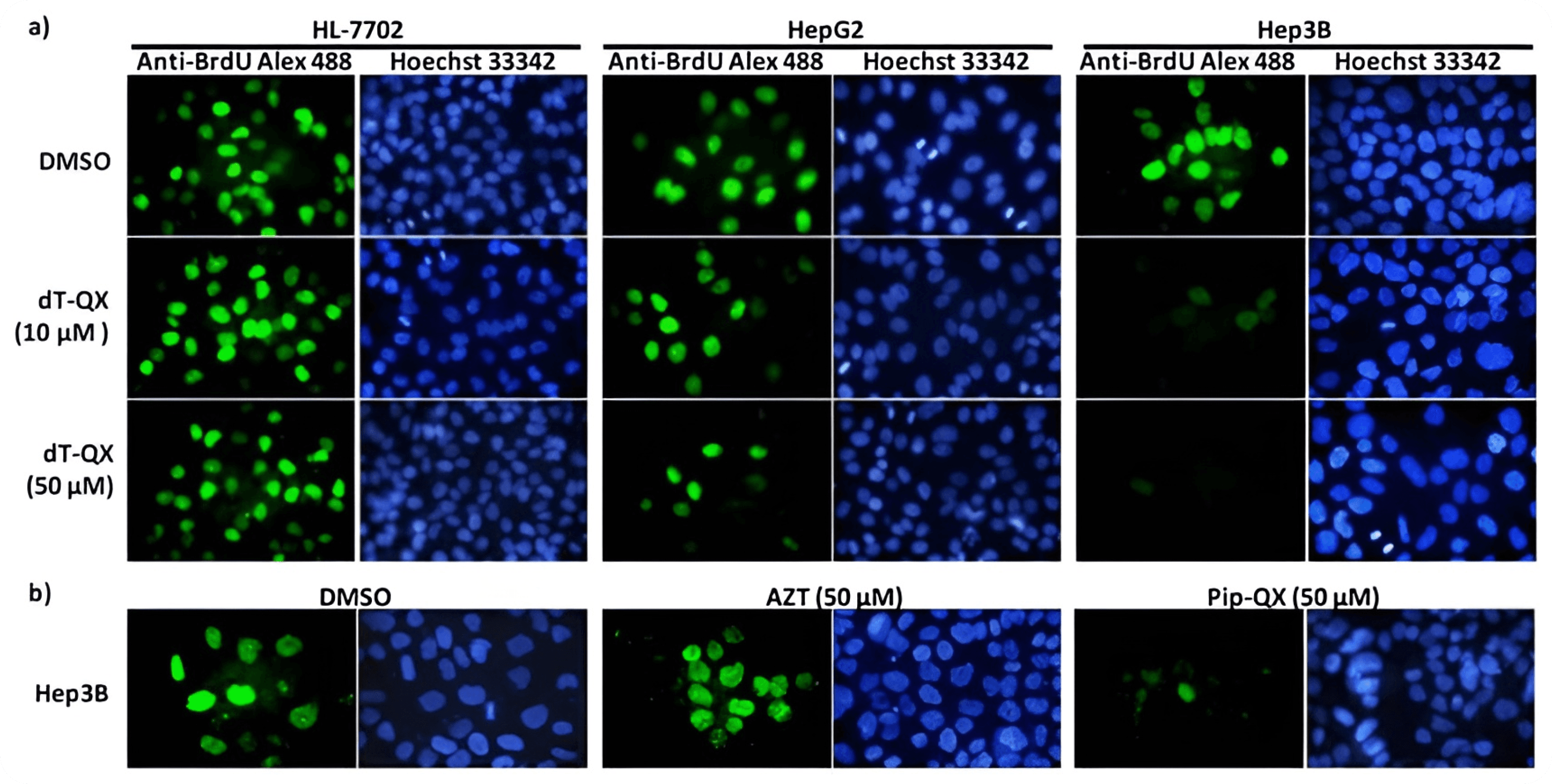
Comprehensive and complementary assays spanning DNA synthesis, colony formation, flow cytometry, and molecular checkpoint profiling.
Adaptable platforms suitable for primary cells, immortalized lines, stem cells, and 3D cultures.
Quantitative and qualitative outputs designed to meet discovery, translational, and regulatory needs.
State-of-the-art instrumentation and expert analysis ensuring reproducibility and precision.
Guided by regulatory compliance aligned with GLP and clinical research standards.
