Discover how cells sense, generate, and respond to mechanical forces through our cutting-edge mechanosensing and force transduction assay platforms. These powerful techniques provide essential insights into cellular contractility, mechanotransduction pathways, and the physical properties of the cellular microenvironment—vital for understanding development, cancer progression, tissue remodeling, and fibrosis.
Traction Force Microscopy quantitatively measures the contractile forces exerted by cells on deformable substrates embedded with fluorescent beads. By tracking substrate displacements under cells through high-resolution imaging, we reconstruct detailed traction force maps that reveal spatial distribution and magnitude of cellular forces. This assay illuminates how cells physically interact with and remodel their microenvironment, influencing migration, differentiation, and tissue architecture.
The transcriptional co-activators YAP and TAZ are key mechanotransducers regulating gene expression in response to mechanical cues. We use immunofluorescence and advanced image analysis to quantify YAP/TAZ subcellular localization, determining shifts between cytoplasmic and nuclear compartments. This assay links biomechanical signals to downstream cellular behaviors such as proliferation, stemness, and differentiation.
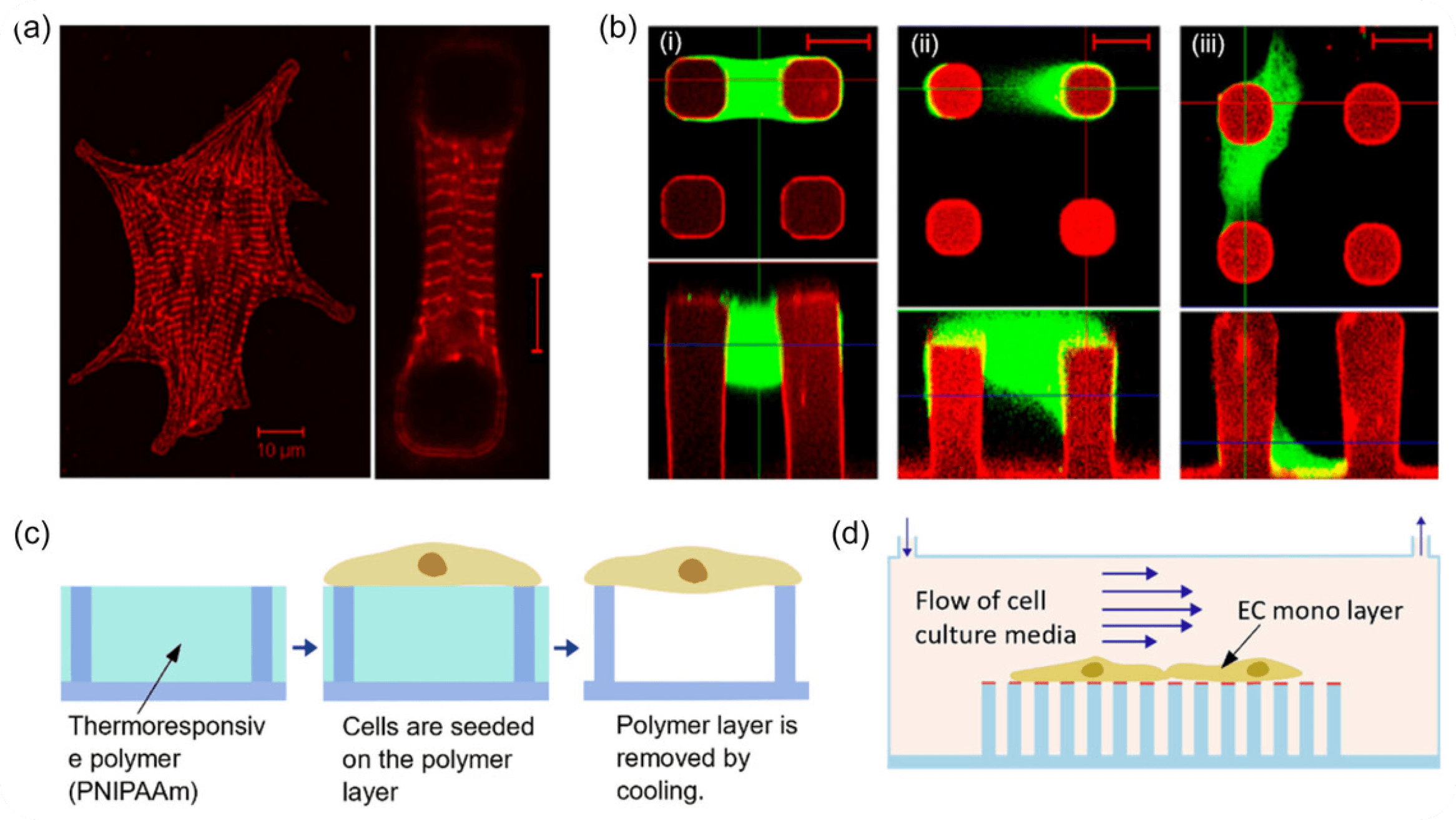
Micropillar arrays featuring flexible microfabricated posts provide nanoscale resolution of cellular traction forces by measuring pillar deflections under load. Combined with substrate elasticity measurements using atomic force microscopy or microindentation, our platforms characterize how cells sense and adapt to mechanical properties of their niche, essential for biomaterial and mechanobiology investigations.
High-resolution quantitative force mapping using state-of-the-art microscopy and computational tools.
Integrated mechanotransduction assays linking physical forces to gene regulatory networks.
Customizable micropillar and substrate platforms emulating physiological stiffness ranges.
Expert analysis and reporting facilitating biological interpretation and decision-making.
Validated protocols across diverse cell types and research applications.
