Unlock the potential of microbial enzymes and metabolic pathways with our advanced analytics and bioprocessing solutions. From enzymatic activity screening to bioproduct optimization, our comprehensive platforms enable precise, scalable, and innovative applications in industrial biotechnology and environmental sustainability.
Microbial enzymes—proteases, lipases, cellulases, and amylases—are pivotal in industrial biotechnology and environmental applications. Advanced screening combines classical plate-based assays with high-throughput quantitative techniques:
● Protease Activity: Screening on casein or skim milk agar with halo zone visualization remains the initial step. Quantitative assays measure proteolytic activity using synthetic or natural substrates, applying spectrophotometry or fluorometry for precise kinetics.
● Lipase Activity: Tributyrin agar plates reveal lipolytic zones; however, titrimetric and colorimetric assays, alongside pH-stat techniques, provide quantitative insights. High-throughput microplate-based assays enable simultaneous screening of multiple strains or conditions.
● Cellulase Activity: Congo red staining on carboxymethyl cellulose agar detects cellulolytic zones. Quantification employs DNS (3,5-dinitrosalicylic acid) assays to measure released reducing sugars, integrated with automated plate readers.
● Amylase Activity: Iodine-starch agar assays allow visual identification of starch hydrolysis. Enzymatic activity assays quantify liberated maltose or glucose, often coupled with chromatographic methods for product profiling.
Microbial fermentation optimizes substrate conversion into valuable bioproducts such as biosurfactants, biopolymers, and pigments:
● Substrate Utilization Profiles: Using HPLC, GC-MS, or enzymatic kits, advanced fermentations monitor carbon source consumption and metabolic fluxes. Omics-guided approaches (transcriptomics, metabolomics) illuminate pathway regulation.
● Bioproduct Quantification: Advances in analytical chemistry enable accurate yield estimation of biosurfactants (via surface tension and emulsification index), polymers (gravimetric and spectroscopic methods), and microbial pigments (UV-Vis and HPLC-MS).
● Process Optimization: Bioreactor systems integrated with sensor feedback allow real-time control of pH, dissolved oxygen, and nutrient supply to maximize bioproduct synthesis.
Assessing microbial capacity for pollutant degradation is key to sustainable environmental management:
● Pollutant Breakdown Assays: Microbial degradation of hydrocarbons, dyes, and pesticides is monitored by GC-MS, LC-MS, or UV-Vis spectrometry. Isotope-labeled substrates provide mechanistic insights via stable isotope probing.
● Microbial Community and Enzyme Activity Analysis: Next-generation sequencing and metagenomics reveal biodegrader populations, while enzyme assays quantify activity of key degrading enzymes such as oxygenases and hydrolases.
● Bioremediation Evaluations: Coupling microbial activity data with physicochemical measurements of contaminated sites guides bioremediation strategies, integrating laboratory and in situ studies.
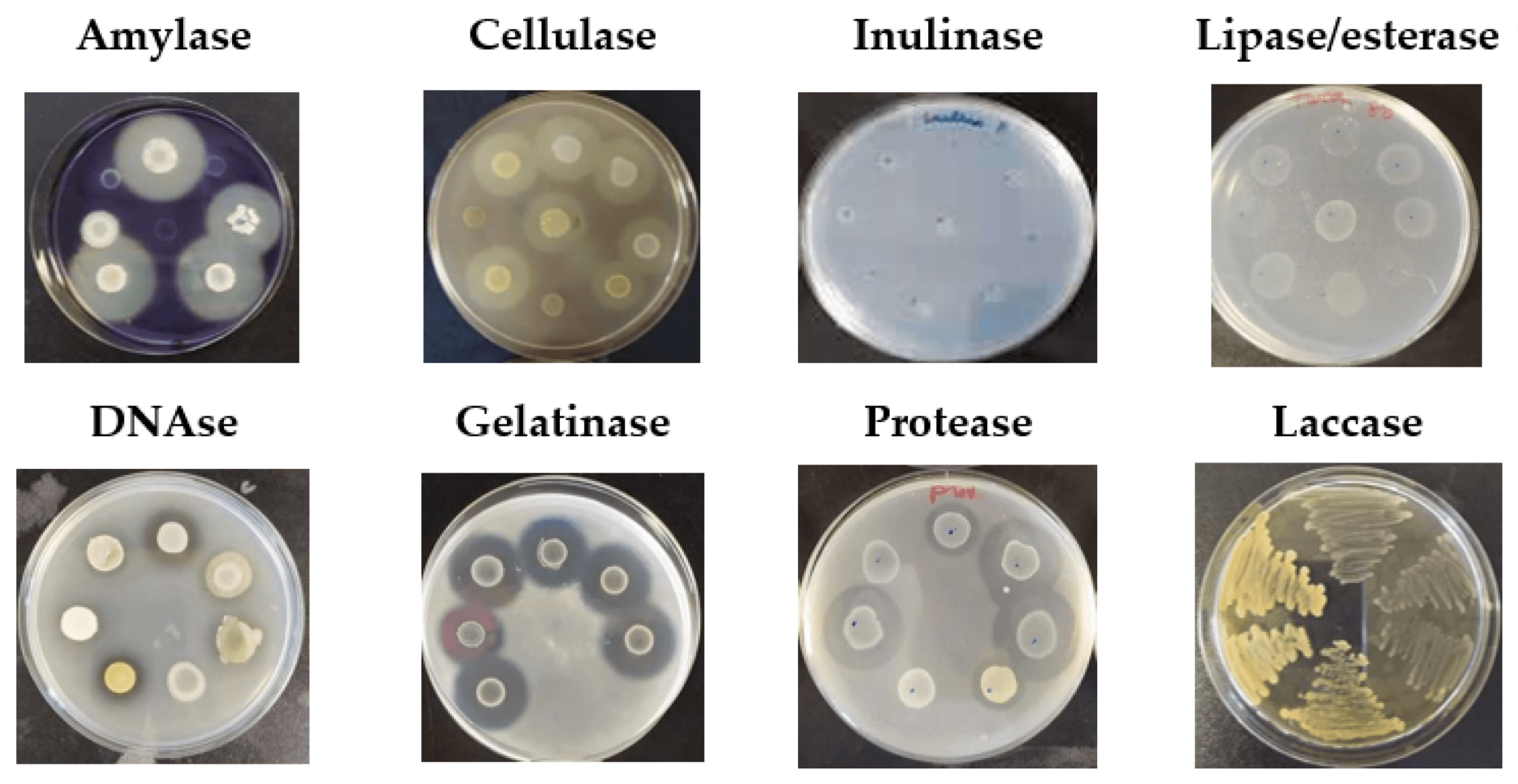
Comprehensive enzymatic activity screening with high-throughput capabilities.
Advanced fermentation platforms for optimized bioproduct synthesis.
Cutting-edge analytical tools for substrate utilization and yield quantification.
Integrated environmental biodegradation and bioremediation solutions.
Expert support in assay design, data interpretation, and process optimization.
